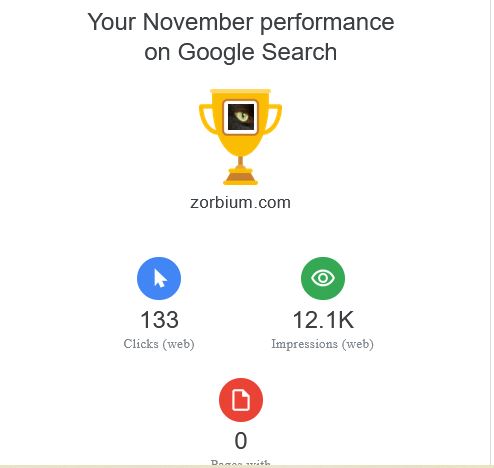
In November, this site appeared in Google search results 12,000+ times. That might not sound like much, until you understand what those searches mean.
People don’t search for rare drugs unless something is wrong.
Research including Cornell University investigators has shown that when an obscure medication suddenly spikes in search volume, it often signals that people are experiencing problems, confusion, or fear — and search engines respond by elevating the information people need. 1 Hwang, K. O., et al. (2016). “Assessing the Quality of Online Drug Information Using Google PageRank.” arXiv preprint arXiv:1611.08848. Retrieved December 4, 2025, from https://arxiv.org/abs/1611.08848
And that’s exactly what happened here.
The top searches weren’t “where to buy Zorbium.”
They were:
“zorbium”
“zorbium for cats”
“zorbium side effects cats”
These aren’t shopping queries.
They’re warning-sign queries, typed by people worried about their pets, trying to make sense of reactions they weren’t warned about.
Google didn’t send them to the manufacturer.
Google ranked this site above Elanco, the company that makes Zorbium®, because searchers needed more than marketing materials.
Why? Because the signal came from you.
Algorithms respond to patterns.
This month, the pattern was unmistakable:
Pet parents needed safety information.
Pet parents needed honesty.
Pet parents needed answers.
And Google followed their lead.
If you found this site through search, you’re part of that signal.
You helped show Google what matters more than pharmaceutical marketing: the voices of worried pet owners.
You searched.
Google heard you.
And it brought you to a place built by someone who asked the same questions after losing her own cat.
Welcome. You’re not alone.